
Save our soil
Regenerating farming’s future
I’m a fan of Clarkson’s Farm. Like him or not, Jeremy Clarkson is a brilliant communicator and has done great work bringing to life the tough reality of modern farming in Britain for a layperson audience.
But watching the final episodes of the most recent series, I felt despondent. There was Jeremy and his land agent Charlie glumly reviewing their failed crops and bemoaning the lack of rain as though the whole thing was out of their – our - hands.
In the background, acres of what to my (admittedly non-expert) eye looked like bare, denuded, brown dirt.
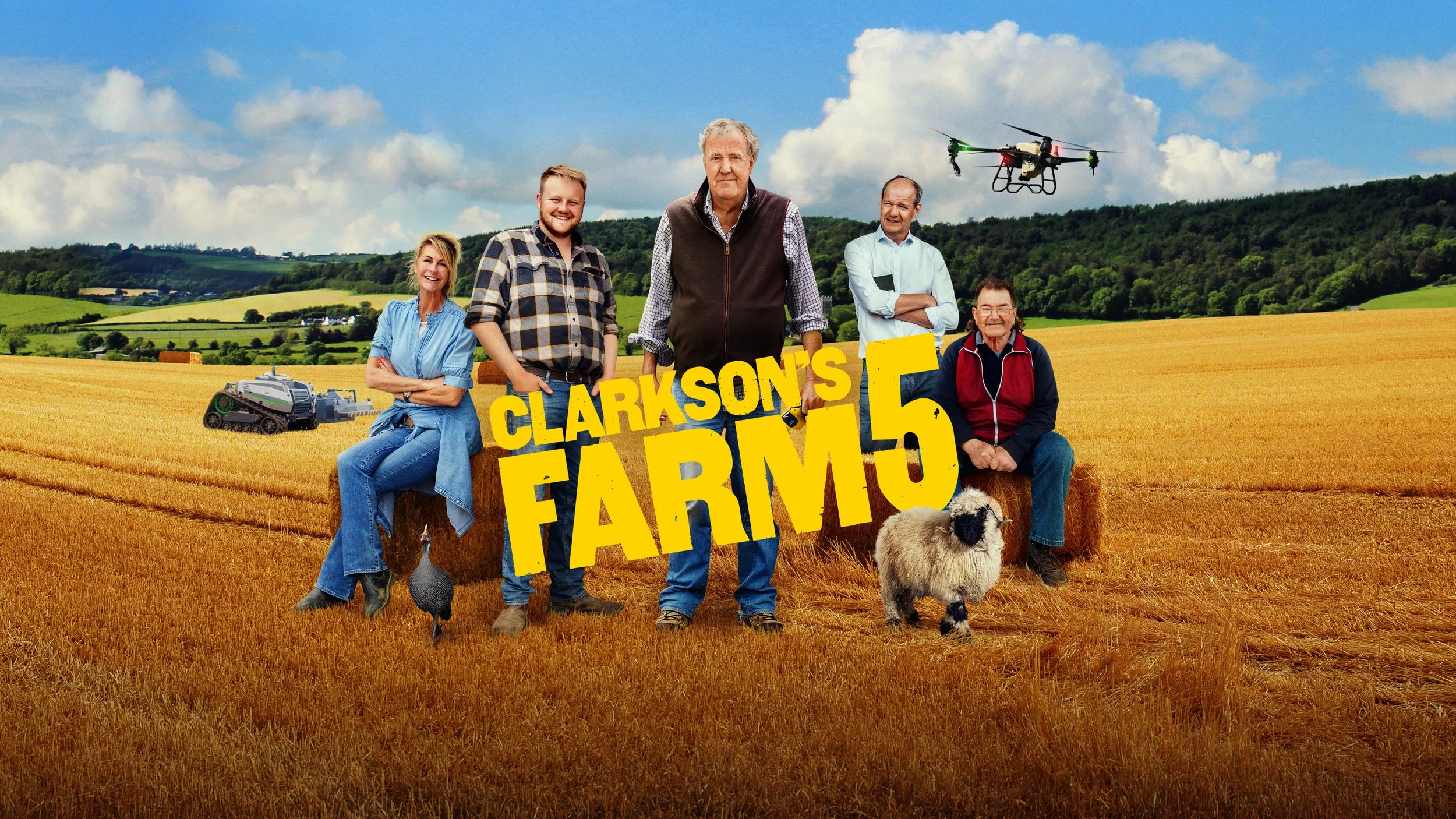
Image credit Amazon Prime
So Groundswell was a welcome antidote to this doom narrative of inevitable climate decline and associated food insecurity.
This is the third film in a series that spotlights regenerative agriculture and showcases its successful implementation across the globe. Not showcasing it as a trendy fad, nor denying the enormity of the task at hand, but presenting it as a potential solution to grasp hold of, with positive results proven over a period of 10+ years.

Image credit Amazon Prime
At the heart of the narrative is soil. Not just as something we grow things in, but as a living ecosystem – one that can play a critical role in climate resilience, biodiversity, water retention, food production and farm profitability. The film’s central proposition is that if we can restore the health of the soil, we can begin to address several of the problems currently facing agriculture at once.
And the examples are compelling.
Across five continents, Groundswell meets farmers, scientists and Indigenous leaders implementing different ways of working with the land: reducing soil disturbance, keeping soil covered, increasing plant diversity, integrating livestock, planting trees and using farming systems that put living roots back into the ground. The point isn’t that there is one magic formula for regenerative agriculture. It’s that there are multiple ways to rebuild the biological health of soil and make agricultural systems more resilient.
There are examples of degraded land being brought back to life; of grasslands recovering, rivers running cleaner and biodiversity returning. There are farmers finding that healthier soils can hold more water – potentially making crops less vulnerable when rainfall becomes less predictable. And there are examples where regeneration is being pursued not simply as an environmental project, but as a way of making farming businesses more viable by reducing reliance on expensive external inputs and building resilience over time.
The film also takes us beyond the relatively privileged world of Western farming. Its stories span places including India, Brazil, Kenya and Colombia, showing how regenerative approaches can intersect with food security, livelihoods and community resilience - even in refugee camps.

Image credit Groundswell International
Also striking was the speed and scale of some of the transformations. Landscapes that appear exhausted are shown not necessarily to be lost forever. Given the right conditions, soil is capable of recovering, plants can return, water can be held and ecosystems can begin to rebuild.
The new way of doing business
This film is a timely signal, as regenerative agriculture increasingly moves beyond the farm and into the boardroom.
For businesses that depend upon agriculture for their raw materials, the health of soil, water and ecosystems is becoming a business issue as much as an environmental one. If crops become less reliable, water scarcer and farming more expensive, the resilience of the supply chain is at stake.
Unilever, for example, has committed to implementing regenerative agriculture practices across 1 million hectares of agricultural land by 2030. Its rationale is revealing: “nature is a business-critical resource”. Without sustainable agricultural systems to deliver raw materials, and water with which consumers can use personal care and laundry products, this business would be in big trouble.
It’s not alone. Nestle, General Mills, PepsiCo and other consumer good giants have equally ambitious targets.
Perhaps most interestingly, this is starting to change the language businesses use. Regenerative agriculture isn't simply being presented as a way to reduce environmental harm. It is increasingly being framed around resilience, supply security, farmer livelihoods and long-term business viability.
That feels significant. Because if nature becomes understood as infrastructure – something business fundamentally depends upon rather than something it simply needs to protect – the case for regeneration becomes much harder to dismiss as a nice-to-have.
Conclusions
As a showcase for regenerative agriculture, Groundswell offers something we don’t see enough of: a narrative of hope and possibility. It doesn’t suggest the challenges facing farming are simple, or that regeneration is a silver bullet. But it does show that the future of food and farming isn’t predetermined – and that there are choices we can make about what comes next.
If you’re interested in food, climate, farming or the future of our planet, it’s well worth a watch.
